Well, I’d give the demolition crew an E for Effort. Go watch the video and see the other photos over here.
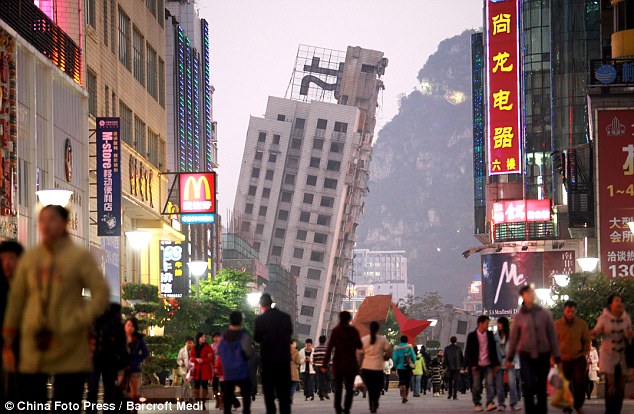
Well, I’d give the demolition crew an E for Effort. Go watch the video and see the other photos over here.
I’ve always had mixed feelings about Niall Ferguson, the bad-boy of world history, always trying (often successfully) to pull the rug out from under our conventional belief systems and shatter our sacred illusions. His great history of WWI, The Pity of War, was a wonderful if infuriating read; infuriating because he constantly speculated about “what if,” and even arrived at the conclusion that Germany was meant to have won the war and the world would have been better off if it had. (Who knows? But he certainly makes an elegant argument.) He has especially ruffled feathers for praising colonialism and empire.
At the end of his 2006 history of 20th century wars, Wars of the World, Ferguson states matter-of-factly that the age of Western ascendancy has ended, and that of Eastern ascendancy begun. I read the book in Beijing when it came out during the Bush administration and it made perfect sense – America was caught in an impossible place, bleeding money, choked by debt and snagged in two seemingly endless wars. And I was seeing with my own eyes what China was capable of. Now, nearly three years later, things look considerably worse for America, something that didn’t seem possible in early 2007.
The article by Ferguson that I’m looking at today is absolutely a must-read. I know already who it will infuriate and who it will delight. I hear all the praise and all the objections. Allow me to offer a longer-than-usual snip. (I’m tempted to simply paste the entire thing it’s so interesting.)
Back in 2004 I warned that the US had imperceptibly come to rely on east Asian capital to stabilise its unbalanced current and fiscal accounts. The decline and fall of America’s undeclared empire might therefore be due not to terrorists at the gates nor to the rogue regimes that sponsor them, but to a fiscal crisis at home.
The realisation that the yawning US current account deficit was increasingly being financed by Asian central banks, with the Chinese moving into pole position, was, for me at least, the eureka moment of the decade.
When, in late 2006, Moritz Schularick and I coined the word “Chimerica” to describe what we saw as the dangerously unsustainable relationship between parsimonious China and profligate America, we had identified one of the keys to the coming global financial crisis.
The illusion of American hyperpuissance was shattered not once but twice in the past decade. Nemesis came first in the backstreets of Sadr City and the valleys of Helmand, which revealed not only the limits of American military might but also, more importantly, the naivety of neoconservative visions of a democratic wave in the greater Middle East. And it struck a second time with the escalation of the subprime crisis of 2007 into the credit crunch of 2008 and finally the “great recession” of 2009. After the bankruptcy of Lehman Brothers, the sham verities of the “Washington Consensus” and the “Great Moderation” were consigned forever to oblivion.
And what remained? By the end of the decade the western world could only look admiringly at the speed with which the Chinese government had responded to the breathtaking collapse in exports caused by the US credit crunch, a collapse which might have been expected to devastate Asia.
While the developed world teetered on the verge of a second Great Depression, China suffered little more than a minor growth slow-down, thanks to a highly effective government stimulus programme and massive credit expansion.
It would of course be ingenuous to assume that the next decade will not bring problems for China, too. Running a society of 1.3bn people with the kind of authoritarian planned capitalism hitherto associated with the city-state Singapore (population 4.5m) is fraught with difficulties. But the fact remains that Asia’s latest and biggest industrial revolution scarcely paused to draw breath during the 2007-09 financial crisis.
And what a revolution! Compare a tenfold growth of gross domestic product in the space of 26 years with a fourfold increase in the space of 70. The former has been China’s achievement between 1978 and 2004; the latter was Britain’s between 1830 and 1900. Or consider the fact that US GDP was more than eight times that of China’s at the beginning of this decade. Now it is barely four times larger – and if the projections from Jim O’Neill, Goldman Sachs’ chief economist, prove to be correct, China will overtake America as soon as 2027: in less than two decades.
I am not convinced it’s true that China “scarcely paused to draw breath during the 2007-09 financial crisis.” I think the crisis dealt China a severe blow from which it’s still reeling. But…. I still think Ferguson is essentially right, that the pendulum is swinging in anew direction and the balance of power is shifting faster than anyone would have believed just a decade ago.
China is going to have to deal with unbelievable problems. (And yes, so is America.) China’s key cities are in the middle of a property bubble; its environment is so fragile whole swathes of the ecology may be doomed; corruption is so rampant even the central government recognizes it can undo much of the progress of the past three decades; and there are still some 650 million living in deep poverty.
Predictions of China’s collapse appear in the news every day, as do prediction of America’s. I don’t pay these predictions much heed. Things happen far too slowly, with far too much lethargy, for either China or the US to go down in a blaze. Recessions, unrest, turmoil, misery, strife, bankruptcies, economic upheaval – we may see all those things, but I don’t believe we’re going to see either system collapse. What we will see and are seeing, as Ferguson says, is a tipping of the scale, with China gaining influence as US influence wanes. Where the scales will stop is anyone’s guess. I still can’t imagine China as an economic equal – it simply has too much poverty and lack of spending power – but I do see it creeping upwards, at times imperceptibly. It has been better than the US in making sure it gets what it needs to keep the engines roaring, even if it means coddling some of the world’s most unsavory dictators and rogue regimes. And somehow, for all its impossible headaches, it keeps on going.
Ferguson, after making the case for China’s ascendancy, ends on an ambiguous note.
What gave the west the edge over the east over the past 500 years? My answer is six “killer apps”: the capitalist enterprise, the scientific method, a legal and political system based on private property rights and individual freedom, traditional imperialism, the consumer society and what Weber probably misnamed the “Protestant” ethic of work and capital accumulation as ends in themselves.
Some of those things (numbers one and two) China has clearly replicated. Others it may be in the process of adopting with some “Confucian” modifications (imperialism, consumption and the work ethic). Only number three – the Western way of law and politics – shows little sign of emerging in the one-party state that is the People’s Republic.
But does China need dear old democracy to achieve enduring prosperity?
The next decade may well answer that question. Then again, it may take another 500 years to be certain that there really is a viable alternative to western ascendancy.
I think China has already shown it doesn’t need “dear old democracy,” no matter how apoplectic that may make some of its critics. It will lean more and more in that direction, especially as incomes rise and people realize they are not as dependent on the government as it would like them to believe. But democracy as we know it and rule of law – well, despite many encouraging stories of reform, I’m not going to recommend anyone hold their breath.
All in all, I think Fergie gets it right. Looking at China’s history and its staying power, and at its sheer industriousness and optimism, I have to discount the reports of China’s imminent demise. And America’s too. I just think America will keep drifting lower as China edges higher, with lots of painful stumbles along the way.
Long-time readers know this is a topic that always annoyed me (to put it mildly) – the treatment of hepatitis B carriers as lepers, banning them from certain types of jobs and needlessly stigmatizing them.
If this story is accurate, change is finally in the air:
China is set to issue regulations to remove hepatitis B check from physical examination for school entrance and work, according to the Ministry of Health.
Mao Qunan, a spokesman with the ministry, said here Tuesday that the move was based on related organizations’ thorough demonstration in regard to whether hepatitis B carriers will affect other people’s health.
However, Mao said restrictions will still exist in jobs that may induce hepatitis B virus transmission such as blood sampling.
“The list of these special professions that need restriction will have to go through a series of legal procedures for approval,” said Mao, adding that the upcoming regulations will cover related aspects.
In addition, the results of hepatitis B tests for other medical purposes should be protected as part of examinees’ privacy, and such tests should not be carried out by force.
“As we know more about the hepatitis B virus, our prevention and treatment measures become more specific,” said Xie Rao, a senior liver disease physician with the Beijing Ditan Hospital, adding that the move showed that the country’s understanding of the disease had entered a higher level.
Hepatitis B has been around about as long as humanity itself and has been well understood for many decades. There has been no sudden breakthrough that convinced the Chinese authorities that it was safe to end the ban, and the line that their understanding has now “entered a higher level” is baffling. All they did was catch up with what’s been common knowledge around the world for years: hepatitis B carriers, like those who test positive for AIDS, pose no extraordinary danger to their colleagues.
If this actually happens and the ban is lifted, I give China credit for reversing what was a vile policy. That it took this long, ruining many people’s lives along the way, is a tragedy.
Link via Danwei.
I’m not making it up:
Taiwan plans to apply for World Heritage status for the complex Chinese characters that China stopped using after 1949 but Taiwan continues to use today, President Ma Ying-jeou said Saturday. “In order to preserve the world’s oldest and most beautiful language, I have entrusted minister without portfolio Ovid Tzeng to prepare for making the application,” he told an international seminar on teaching Chinese, held in Taipei.
Ma said he has asked Tseng to “actively apply” for world heritage status for complex Chinese characters, but did not say when Taipei will make the application.
Ma reiterated his appeal to China that the Chinese mainland, while using the simplified Chinese characters, should still let people know how to read the complex characters.
And from the AFP yesterday:
Ma said he was afraid that the traditional system, which he said was a “beautiful language” that has documented China’s history for more than 3,000 years, was giving way to the simplified one.
“Only about 40 million people in the world, mostly in Taiwan, Hong Kong, and Macau are using traditional Chinese characters,” Ma said while addressing hundreds of Chinese-language experts at a seminar in Taipei Saturday, according to a statement published on the presidential office website.
“The number accounts for a marginal one-33rd of the people using the simplified system,” he added.
Ma said he had ordered the government to set up a special committee tasked with pressing the UN to place the traditional Chinese characters on its world cultural heritage list.
I’ve heard all the arguments about why each system is better, and even heard arguments for the abolition of both in favor of pinyin. (This site has some interesting thoughts on the subject.) All I can do is speak for myself. I started learning traditional characters in Taiwan and after a year switched to simplified when I moved to the motherland at the end of 2006. The verdict: simplified characters are a hell of a lot easier to memorize, and traditional are undoubtedly more like works of art. Easier doesn’t mean better. Esperanto is probably a lot simpler to learn than English, but I want to read Shakespeare and Milton and Dan Brown in their native language.
No matter which you feel is better, is Ma’s approach a sensible one? It almost has the makings of a publicity stunt. What will World Heritage status actually mean for traditional Chinese?
Thanks to the reader who sent me this story and links. It’s a strange one.
A week ago the Shanghaiist asked me if I’d prepare an end-of-year or end-of-decade list of what were for me the top 5 China-related event.
Now that the post has been up on their site a few days, I’m reprinting it here for posterity. These are not necessarily the most important things that happened. The Sichuan earthquake, for example, is more important than some of my other choices. There were too many to choose from, like Sun Zhigang, the tainted milk scandal and Hu’s tremendously important strides in bringing Africa closer to China. Instead, these are the items that touched me on a very personal level, inspiring me to feel joy or outrage, hope or gloom.
From Shanghaiist:
Richard Burger worked in Greater China (mostly the PRC) as a PR executive for more than six years, the last few months of which he spent as editor and columnist for the English-language Chinese daily newspaper The Global Times. He is also the author of one of the oldest and most respected China blogs, The Peking Duck
What a difference ten years has made for China, from the new kid on the block to one of the world’s most influential movers and shakers. Since 2000, China has turned the notion of “New World Order” on its head.
During those 10 years we’ve watched China experience some breathtaking highs and painful lows. I first started watching China early in 2001, when I moved from the US to Hong Kong, and still remember exactly where I was and how I felt when I heard the big news that made it to No.1 on my Personal Five Most Significant China Stories of the decade.
1. July 13, 2001: Beijing is named host city for 2008 Olympic Games
This announcement created a wave of euphoria that only intensified as the Opening Ceremony approached. From the moment it was reported until the Olympic Green was locked down at the end of August 2008 we’ve never seen so many people so motivated for so many years over a sports competition. Nothing since has ever topped this one.
2. April 20, 2003: Chinese government holds live on-air SARS press conference
I know, that sounds kind of dry. But if you were there watching it live you’ll know just how jaw-dropping it was. Some of the world’s most tight-lipped, rarely seen leaders took live questions from the international media pool in Beijing and revealed there were hundreds more known cases of SARS in Beijing than they’d admitted earlier. Afterwards, the minister of health and the mayor of Beijing were fired for negligence of duty and the May holiday was canceled to keep people from traveling. Live and in person, we watched China’s government realize that being a global power demands accountability.
3. April 7, 2008: A Chinese hero is born
It couldn’t have been better scripted by the propaganda department: A graceful young woman, an Olympic torchbearer confined to a wheelchair, is attacked in full public view in Paris by a pro-Tibet activist determined to grab the Olympic torch from her hands. She refuses to yield, using her body to protect the torch as if it were a child. The timing was incredible: China was reeling from criticism of its handling of ethnic tension in Tibet, and photos of the emotionally charged scene galvanized the global Chinese community and created a groundswell of national pride just when China needed it. This sense of commonality and closing rank was to be matched only by the volunteerism generated by the Sichuan earthquake the next month – a close runner-up for this list.
4. June 16, 2009: Chinese court frees Deng Yujiao
The release of Deng Yujiao, the 21-year-old Chinese karaoke waitress turned folk hero who stabbed to death a drunken party official who tried to force her to have sex, resonated with everyone in China. Originally found guilty of murder, her plight captured the imagination of Chinese activists and netizens and her release was historic, proving that with enough pressure from an energized and outraged public the Chinese government will respond to injustices that in the past were swept under the carpet. We’ll know in the year ahead if it truly marked a turning point.
5. June 2009 – present: Post-Olympic communication crackdown
After opening its Internet more than ever before for the 2008 Olympic Games, China took a sharp swerve in the opposite direction the next year. The ominous clouds of heightened censorship moved in prior to the 20th anniversary of the “Tiananamen Square Incident” with the banning of Chinese and English-language social media sites and it kept getting worse right through the October 1 festivities, with no end in sight to this day. Many had misread the April 20, 2003 press conference as a sign China was ready to open up. In some ways it has, but the Internet remains more censored than ever.
###
I know we all have our different picks for a list like this. So feel free to suggest your own.
Can you guess where it is?
You literally have to see it to believe it. This isn’t new; it came out four months ago, but I just saw it today. It drives home like nothing I’ve ever seen the difference between a ghost mall in the US (which is usually simply closed down and then leveled or left to deteriorate until it’s sold) and in China (where it can just keep on operating in what seems to be blissful disregard of reality).
Only one word keeps coming to mind as I watch it: sustainability. How long can places like this keep operating? How long can the charade continue? In most countries this wouldn’t go on past a few weeks or months. In China it could be years and years. But one thing seems certain: it can’t go on forever. Then again, this is China, and you just never know.
Watch the clip. It’s unforgettable.
Aside from a post on canings in Singapore, the most linked-to and visited post I ever wrote was about the inevitable collapse of China’s luxury malls. Some will do fine, like the Village in Sanlitun (the stores on the street level and the restaurants, at least). Others, like Solana and Gemdale and The Place and 3.3, well, I don’t think they stand a chance. Overbuilt is overbuilt.
Taking a much more thorough, well-researched and intelligent approach to the always controversial issue of China’s bubbling economy than I did, one of my favorite reporters in Beijing warns of a property bubble that could cripple China for many years to come. Please indulge a healthy clip:
As fast as China is growing and urbanizing, its cities are churning out more office towers and luxury malls than can be leased for years to come. Tianjin, a gritty metropolis not far from Beijing, will soon have more prime office space than will be filled in a quarter-century at the current absorption rate. Shunyi County, in the capital’s suburbs, sold a residential plot last month for $400 per square foot, a new national record. The bidders were mostly state-owned companies and the winner none other than a developer owned by Shunyi County. Where the developer came up with the money for the purchase is unclear, but the county will nevertheless book $740 million as revenue from the sale.
China’s mercantilist trade policy is another contributor to its asset bubble. By artificially depressing the value of its currency and making it difficult for locals to invest abroad, China has forced an artificially large amount of capital to chase after domestic investments, inflating property and stock prices. It’s the same scenario China pursued in late 2007, before its stock market lost two-thirds of its value, but that era was characterized by monetary restraint compared with today.
“It’s a pure debt game,” says Andy Xie, an economist who advises private investors and sees the current bubble as “much worse than previous ones.”
In late November China’s ruling Politburo declared that the nation’s monetary and fiscal promiscuity will continue into 2010. The markets, predictably, were overjoyed. Economists who see parallels to the Russian and Brazilian financial crises a dozen years ago are less sanguine.
“The more debt that’s on the balance sheets, whether you see it or not, the more vulnerable borrowing entities become to shocks,” warns Michael Pettis, a finance professor at Peking University and expert on China’s economy and sovereign debt.
China naysayers have been wrong before. Gordon Chang, author of the 2001 book The Coming Collapse of China, has warned–wrongly, so far–that doom lies around the corner. Cushioning China’s economy is its high growth rate, an estimated $260 billion (but declining) annual current account surplus and, at $2.3 trillion, the world’s biggest foreign exchange reserve.
Bubbles, it bears noting, tend to surprise many observers with their longevity. (A FORBES cover story warned six years too early that the U.S. housing bubble threatened to tank the economy.) But when bubbles do eventually blow, it’s usually with a bang.
Friends have been telling me about the deranged property prices in Beijing, and once again, as with the malls, it just strikes me as common sense that this is not sustainable. And you have to consider all the ripple effects a housing bust would foment – all those migrant workers on construction sites, all the construction machiney makers, the cement and lumber providers, all the ancillary businesses, door-knob makers and house painters….
What Epstein is describing mirrors to the letter what we saw in the US in five years ago, and is even more reckless: flipping properties and creating massive pools of debt and the same insane mass hypnosis: “Property values can only increase!” We all know how that goes.
I do not want to see this happen and hope Epstein is totally wrong. But again, my common sense tells me there’s no way he can be wrong. Any student of bubbles, from tulips to dot-coms, can see the gathering storm. I wouldn’t want to be owning any property in China when it meets land.
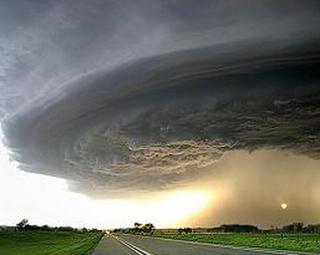
Update: Damn, forgot the obligatory disclaimer: The US started this mess and has been just as speculative and as consumed by the property orgy as China. This is not unique to China. But in China, the crash could be more painful considering the massive dependency on construction. But no one deserves more criticism than the US, and I have said this many times.
Don’t miss the very interesting follow up post to the story I linked to directly below. Seems the Party was just one step behind the Far West blogger, ready to plug any annoying leaks.
I had it coming, I guess. Less than 48 hours after I published an article about the internet situation in Xinjiang (including a short sentence about the ability to circumvent the block), every single internet and phone loophole across the province suddenly stopped working. Obviously it is most likely a coincidence, but I’m beginning to feel guilty when I get concerned calls from other foreigners asking me if my ability to access the internet has been disabled as well.
As I sit here in a hotel room in Shanghai, soaking up what may be the last ounce of internet I see until February, I find myself struggling with what is happening back in Xinjiang. A lively discussion on the ethics of this internet block took place over at the Peking Duck and although I find it interesting I’m glad I didn’t get the chance to enter the debate. [From Richard: I’m glad as well, for your sake. Life’s too short.]
The fact is that I moved to Xinjiang knowing full-well that I was subjugating myself to China’s laws and leadership. I don’t feel that I have the right to complain (although I do reserve the right to remain frustrated!) and I definitely don’t feel like packing up and calling it quits. I refuse to let the internet dictate my life no matter how important
Best of all is the quote he includes at the very end. This wall is about as effective at “protecting” the Chinese people as that other, more famous wall. Great post, once again.
Any commenter who comes on here and argues the GFW is proof of the CCP’s genious because they’re just using it, successfully, to protect China’s citizens from computer viruses and malware does so at their own risk. Please, can’t you come up with something better than that?
Please go read this fascinating post about the government’s digital sequestration of Xinjiang, a phenomenon that stands as a kind of case study of just how deeply the weak-kneed CCP fears any spark that might ignite the tinderbox of public opinion.
One snip about when it might end:
Here is the million-dollar question. If you ask 10 different people in Urumqi when the internet should turn back on you’re likely to get 10 different answers. The list ranges from the 1st of the year to somewhere in the middle of next year but everybody readily admits they’re not for sure.
Until a couple of weeks ago I would have been hesitant to answer this question, but a friend I trust passed along some interesting information that has given me the boldness to make my own predictions. According to some memos sent between the capital and the head office of our city’s main telecom provider, service is expected to open up during the May holiday of 2010.
There you have it. I’ve bet my money and made my prediction. This is just the halfway point…we have another 5 months to go. Of course, being wrong won’t make me sad if it’s sooner rather than later.
A sad situation, and a vivid reminder of how some things haven’t changed all that much. For all its enlightenment and reform, the party remains prickly and paranoid. Imagine any other great power blocking out the Internet in areas where there is turmoil….
And yes, I know, America has done bad things, too, and killed Indians. But I’m talking now about China. And for China, this is a sad episode, a sign of an inherent weakness and lack of confidence, despite the party’s strength and staying power, which I’ve also written about at length recently.
Update: Looking at this a day later, I think this was a pretty mediocre post. Apologies. I don’t mean to beat a dead horse about the CCP’s prickliness, and I’ve tried to make amply clear that that’s not all the party is about. But this episode just bugged me and raised all sorts of memories of bad experiences I had with censorship in China back in 2003.
Just so you know, my friend Lisa is traveling through China at the moment and doing an amazing job documenting her trip in words and pictures. Go to Paper Tiger Tail and keep scrolling. Beautiful writing, beautiful trip.
Comments